Role: UX/UI Designer
Duration: 8 months
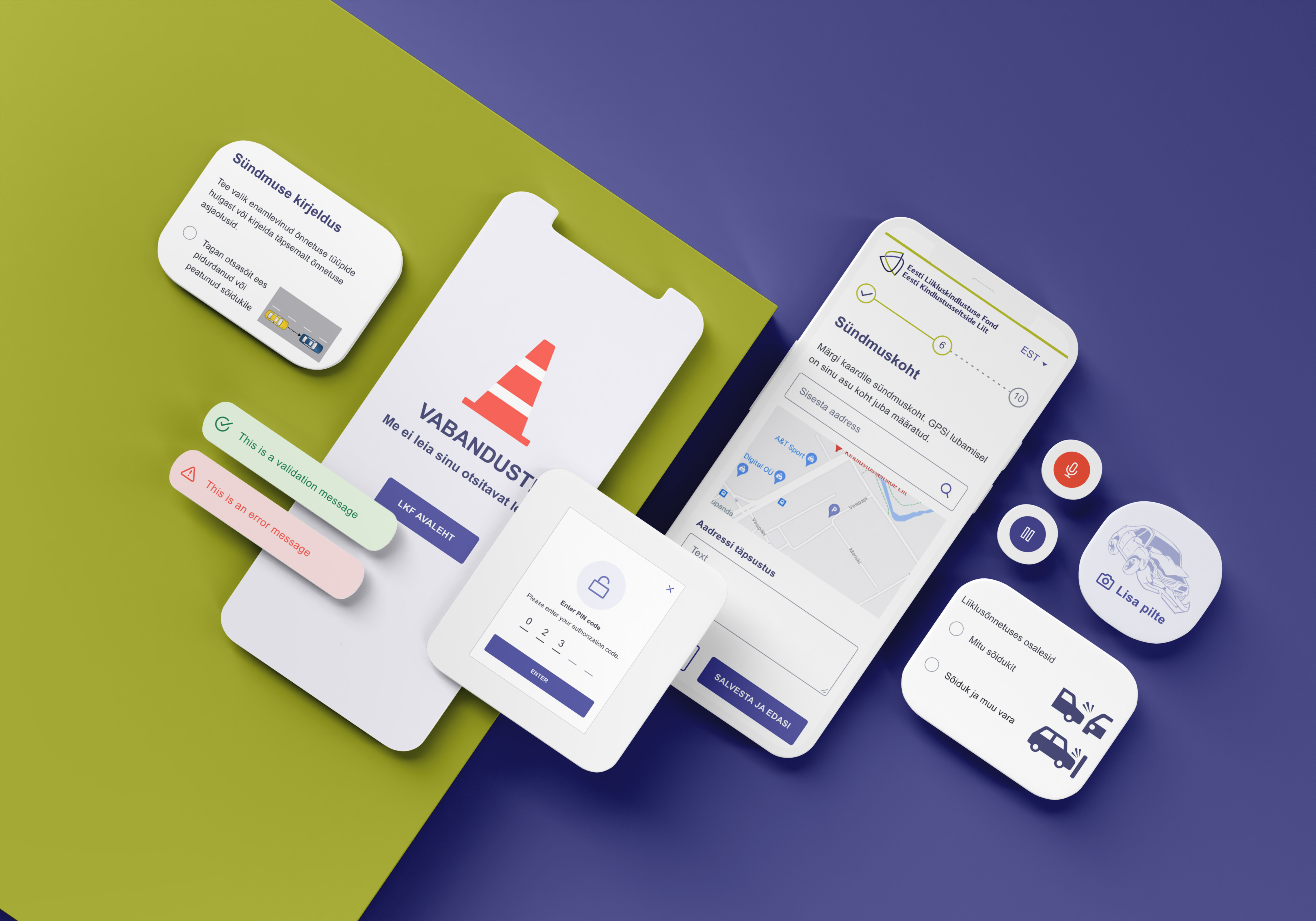
Final work: LKF Web Application
Project Overview
The project was commissioned by the Estonian Traffic Insurance Fund and aimed to digitalize the process of claiming traffic accidents through a new web application. This application is currently being used in nearly 50% of all traffic accident cases in Estonia.
My Role as a Designer
During the project, I worked as the only UX/UI designer, and my tasks included refining the existing wireframes and designing the user interfaces based on the previously gathered data from users and stakeholders. The data was handed off to me by a UX researcher and I then handed off my designs to our team developers. The primary digital tool I used during the project was Figma.
Rethinking the Traditional Process
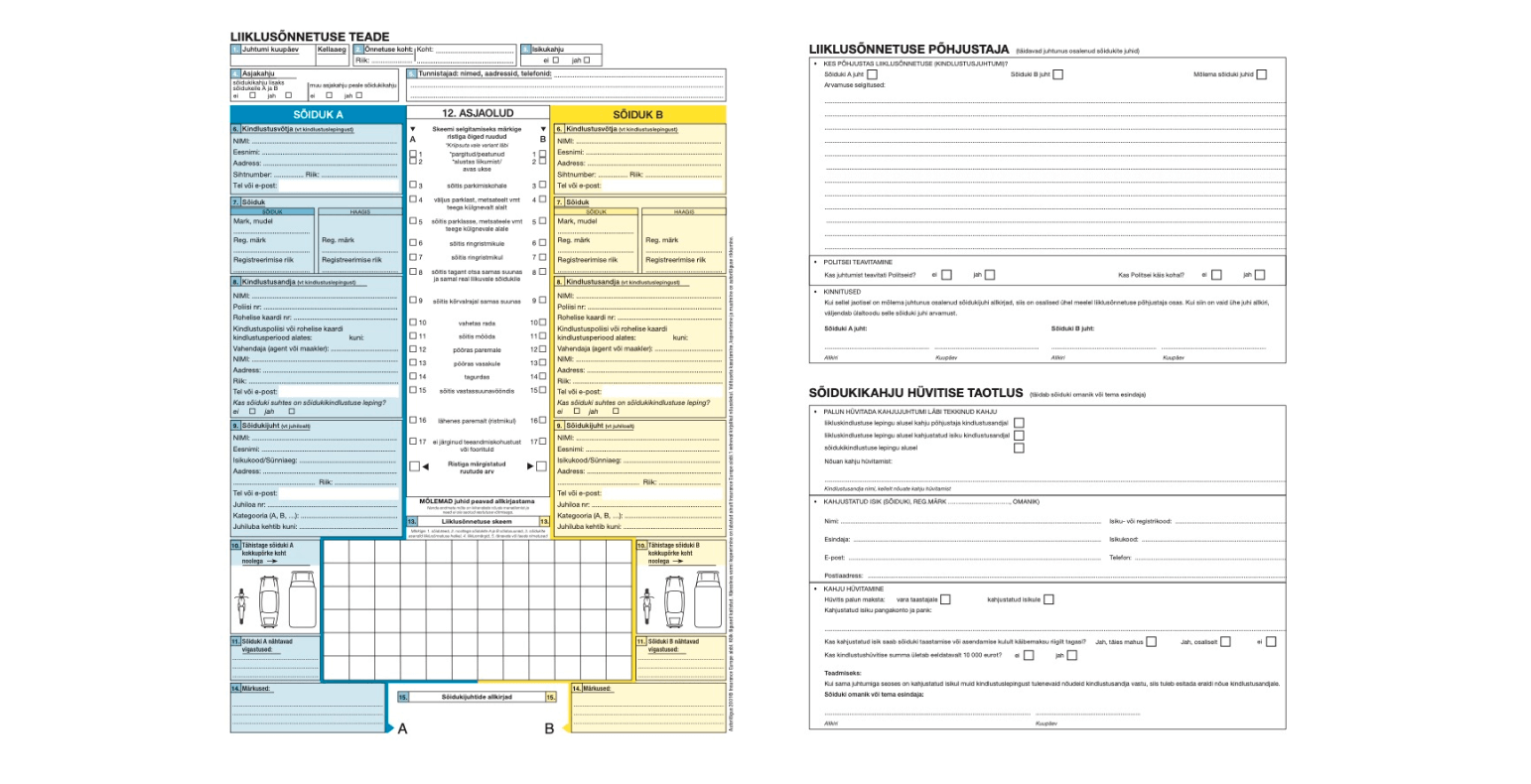
Before, traffic accident reports were manually completed using paper forms, which introduced several inefficiencies. The process often led to errors due to handwriting inconsistencies, incomplete details, and confusion over the correct classification of accident types. The paper-based system also restricted access to a single user at a time, requiring additional copies or photos for documentation. Furthermore, conflicts often arose when individuals prioritized assigning blame over accurately capturing the event, leading to unnecessary involvement from authorities.
Addressing Key Design Challenges
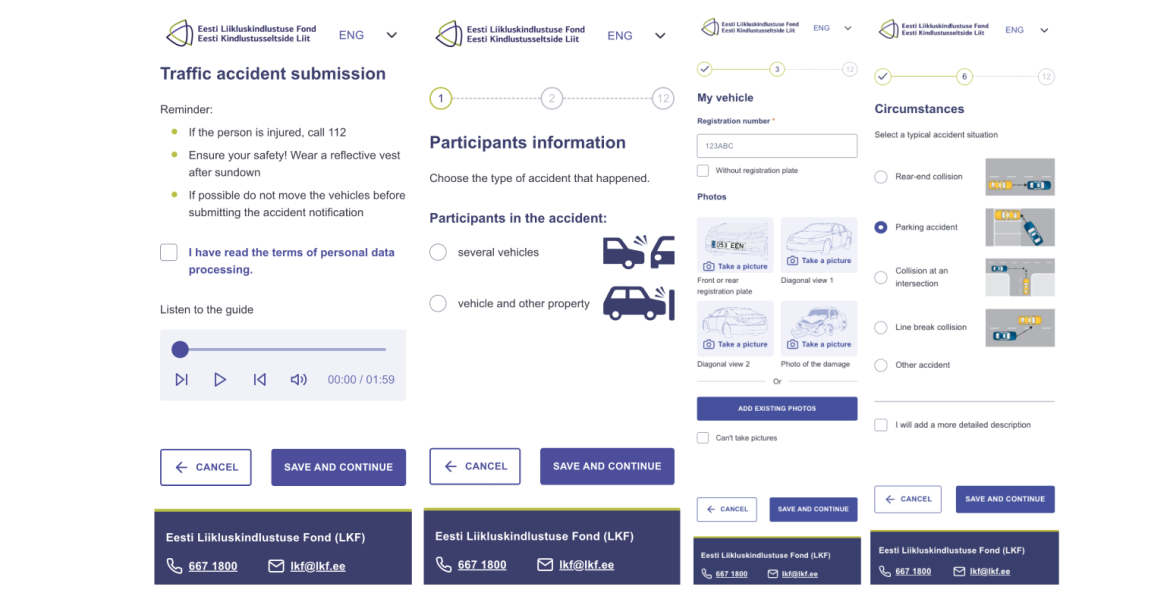
The new digital solution had to be universally accessible, ensuring usability for a wide range of users, from young drivers to elderly citizens. The interface needed to be clear, simple, and intuitive, allowing users to submit precise information without requiring prior familiarity with complex forms. To minimize disruption to traffic, the system also had to enable parallel input from multiple devices, allowing all involved parties to contribute to the report simultaneously. A web-based application would be the most effective solution, providing instant access without requiring downloads or installations.
Designing for Clarity and Accessibility
My design process prioritized simplicity, reducing visual clutter and focusing on a streamlined, step-by-step experience. Data collection forms were stripped of unnecessary elements, ensuring that users could easily navigate the process without confusion.
To support fair and impartial reporting, the application introduced a collaborative input feature. Users could share access to the report via QR codes or SMS links, allowing each participant to submit their details independently. While all parties could review the submitted information, they were unable to alter each other’s inputs, ensuring accuracy and transparency. This approach provided a comprehensive and neutral record of events, reducing conflicts and facilitating smoother insurance claims.
Conclusion
By replacing the cumbersome paper-based accident report with a clearly-designed accessible digital alternative, the web application has significantly improved the accident reporting process in Estonia. After its’ launch, it quickly became the preferred method for reporting, used in one-third of all traffic incidents. While the traditional paper form remains an option, this digital advancement marks a substantial step toward a more efficient and digitally integrated society.
 Mert Oktay - Portfolio